Muzyka Centrum / KAMERATA KRAKOWSKA '97 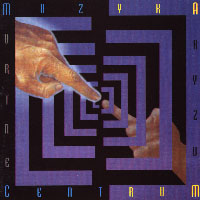 |
click |
Muzyka Centrum / KAMERATA KRAKOWSKA '97 |
click |
This disc constitutes one part of the long-standing partnership between the "Muzyka Centrum" Art Society and the Kamerata Krakowska chamber orchestra. The compositions presented on it, which are by the younger generation of musicians from Poland and Baden-W�rttemberg, reflect the aesthetic diversity characteristic of contemporary music from the last years and highlight the stylistic differences between compositions by composers from countries with differing musical traditions.
Muzyka Centrum Art Society Cracow is an association of performers of contemporary music. It organizes concerts in which all the styles and achievements of contemporary music are represented. Muzyka Centrum was established in June 1977. It comprises 25 leading soloists and instrumentalists. By the end of 1996 it had organize over 450 concerts, including around 400 Polish and world premiers. Since 1991, it has been a member of the European Conference of Promoters of New Music. Muzyka Centrum has been organizing festivals and educational projects i.e. Audio Art Festival in Cracow and International Workshops for New Music Cracow/Stuttgart.
The Kamerata Krakowska was founded in 1989 by conductor Matthias Hermann of Stuttgart and musicians from various Krakow orchestras. At present it comprises chiefly members of the Krakow Philharmonic Orchestra. Something which is of particular importance to the ensemble is performing contemporary Polish music in Germany and German music in Poland. As well as world premieres of Polish composers the Kamerata also has numerous Polish premieres of important works of the European avant-garde to its name (works of Helmut Lachenmann, Luciano Berio, Luigi Nono, Gy�rgy Ligeti and Anton Webern). The ensemble performs regularly in Poland and Germany and has appeared at many European festivals. It is financed by the "Forderverein Kamerata Krakowska e.V." foundation which is based in Ludwigsburg.
MANUEL HIDALGO
was born in Antequera, Andalucia in 1956. His first teacher of composition and theory of music was Juan-Alfonso Garcia, organist at Grenada Cathedral. From 1976 he studied composition under Hans-Ulrich Lehmann at the Z�rich Conservatory. From 1979 -1984 he studied composition under Helmut Lachenmann, first in Hannover and then in Stuttgart. He now works in Stuttgart as a freelance composer.
 Manuel Hidalgo's "EINFACHE MUSIK" (Simple Music) is dedicated to the Singen Music School String Orchestra and its director, Andreas Schmid, and is written with the capabilities of a youth orchestra in mind. Contrary to what the title would suggest, the work is not at all easy. The sharp clarity of the interval structures (fifths, fourths and octaves dominate the work) which is evident in many of Manuel Hidalgo's works testify to the composer's inclination to present vividly the most fundamental qualities of his musical material.
In EINFACHE MUSIK Hidalgo makes conscious use of a variety of playing techniques in new and unusual proportions. Many fragments are played pizzicato, there are important parts for flageolet, and there are passages played col-legno. The strings are treated as percussion; techniques more commonly associated with guitar playing come through into the foreground alongside the traditional tenuto.
Through this style of music, in which the very simplest groups of sounds form the basis of the piece of music, Hidalgo, by opposing tradition, is creating new means of perception.
JOANNA STEPALSKA
was born in Cracow in 1967. From 1990 to 1993 she studied the flute
(B. Swiatek-Zelazny), composition (B. Schaeffer), electronic music (J. Patkowski) and computer music (M. Choloniewski) at the Cracow Academy of Music. From 1993 to 1994 she studied composition (J. Fritsch) and computer music (K Barlow) at the Hochschule f�r Musik in Cologne, and subsequently she took a one-year course in sonology at the Royal Conservatory in the Hague. She has given solo performances with chamber ensembles (including the Cracow "Muzyka Centrum" Art Society) and has attended many contemporary music courses and workshops (including in Warsaw, Cracow, Schwaz, Darmstadt and Madrid). Her compositions have been performed many times in Poland and abroad (including in Austria, Germany, Holland and Slovakia).
PRANAYAMA
During the Summer Courses for Composers in Kazimierz Dolny in 1992 I took part in some seminars on Hindu music led by Bhaskar Chandavarkar from Poona, India. In the course of a few evenings I learnt a lot about the philosophy, religion and culture of India; one source of particular importance was B. K. S. Izengar's book "Yoga". After a few months the idea came to me of reflecting the Indian philosophy of life and portraying through music that which brings joy, contentment, calm and relaxation. Thus Pranayama came into being.
The title is the fourth degree of Yoga on the road to the search for the soul and signifies the rhythmic control of the breathing.
It is by controlling the breathing that the human mind is controlled - joy comes when the breathing and the mind are one.
Many Indian words have been used in the work: tat tvam asi (you are the one), kasmai mam dasvasi (to whom do you relinquish me), sam (he, him), aham (I am, it is I), aum (the all), bhaya (fear), jivan (life), moha (illusion), mudita (joy), prana (breath, life, energy) /prana-vayu?, prasvasa (exhalation), surya (sun), svasa (inhalation), tejas (radiance, sublimity), utkata (mighty, wild), vayu (wind, winds), vitasti (space).
The 16-fragment form of the piece was achieved by using the "M" program on an Atari ST computer and a Roland D110 synthesizer.
Joanna Stepalska
MATTHIAS HERMANN
was born in Ludwigsburg, Germany, in 1960. He studied theory, German and conducting and was a pupil of Helmut Lachenmann. From 1987 he was an assistant and from 1991 Professor of theory and composition at the Staatliche Hochschule f�r Musik und Darstellende Kunst Stuttgart. Since 1992 he has been teaching and lecturing at the Academies of Music in Warsaw, Poznan, Lodz and Cracow as well as at the Tchaikovsky Conservatory in Moscow. He is the founder and artistic director of the "Kamerata Krakowska" chamber orchestra which specializes in contemporary music (since 1990). He is the co-founder and director (together with Marek Choloniewski) of the "International Workshops for New Music Cracow/Stuttgart (since 1993) and the director (together with Hans-Peter Jahn) of the "Internationales Musiktheater-Labor Stuttgart", and a composer, conductor, and writer of radio programs for SDR Stuttgart.
ZBLIZENIA (close relations, approximations) was created in 1991 for an orchestra made up of students from the Academies of Music in Lodz and Stuttgart who had been friendly since 1990. One of the most important events in the history of the partnership between the two academies was a symposium that took place in the International Youth Centre in O�wi�cim in October 1991, at which 20 students from both academies came together. Zbli�enia is based around accurate post-serialist calculations, and the sounds used are primarily murmurs. The piece develops very subtly as it approaches more and more recognizable musical structures which fade away in the final phase. The punctualistic texture of the work exploits sound combinations which would not be perceptible in more densely textured structures. Zbli�enia is a work of subtle progressions and ambiguous perspectives on possible combinations of sounds and structures.
Matthias Hermann
MAREK CHOLONIEWSKI
was born in Krakow in 1953. He graduated from the Krakow Academy of Music in organ playing (L. Werner), theory of music and composition (B. Schaeffer). Since 1976 he has been working in the Electro-Acoustic Music Studio at the Cracow Academy of Music, at present as an Assistant Professor in composition. In 1977 he founded the Artistic Society "Muzyka Centrum", which is chiefly involved in performing concerts. In 1986, together with K.Knittel and P. Bikont, he founded the group "Freight Train". He is the founder of the MCH Studio and co-founder of the Ch&K Studio (together with Knittel). He has written a number of audio-visual computer compositions and has been organizing the "Audio Art" series of concerts since 1987. Since 1990 he has been giving concerts, leading courses on computer music in many European countries and in the USA and Canada. He has written instrumental, electro-acoustic and audio-visual works, as well as music for film, theatre, radio and TV. His concert work is usually as a performer of live computer music. He is the founder and artistic director of the International Festival of Audio Art and the International Workshops for New Music Cracow/Stuttgart (jointly with Matthias Hermann) and the artistic director of the Internationale Akademie f�r Neue Komposition in Schwaz, Austria.
"RIVER DART" is the last poem by the Austrian poetess Ingeborg Teuffenbach (1914-1992), which she wrote in May 1992 for her son, Fritjof Capra, a physicist and professor at California's Berkeley University, and well-known in Poland as an author of popular science books.
The composition River Dart, for voices and computer was commissioned in 1995 by the Avantgarde Verein from Schwaz, and premiered by Olga Szwajger and Marek Cho�oniewski at the opening of the 3. Internationale Akademie f�r Neue Komposition in Schwaz in the Tyrol on 31st August 1995. The composition, inspired by I. Teuffenbach's poem, is written in the "ambient" convention. The musical layering draws on Fritjof Capra's holistic philosophy, and in particular on some elements of it contained in his two publications Tao of Physics and The Turning Point. It uses several original resolutions which are fundamental to the form of the whole work. Microtonal harmonies are achieved by the superimposition of the quarter-tone scale on a glissando structure. The piece is performed on an ATT system (constructed by M. Cho�oniewski in 1989): tapping baton (chopstick) at specific places on the graphic score generates consecutive fragments of music stored in the computer's memory. The majority of these structures have a temporarily continuous nature and while fading in and out are transformed live by the continuous movement of the baton above the music stand where the score is; this movement is transformed by an interactive optical system into glissando cycles the length of the original sound structures. The text of the poem, recited in a whisper inaudible but visible to the audience is subjected to a sound delay transformation and transposition and is then mixed with a synthetic sounds; in this way the text becomes audible only after a certain length of time, and in a slightly altered form. Space and metaphysics are two elements fundamental to the completed form of this piece. This composition also exists in a version with an added group of strings led by a conductor whose reactions to the taps of the chopstick are slightly delayed. The result of this distortion is a natural delay between the synthetic instruments and the strings (the synthetic instruments react immediately to the baton taps, whereas the strings receive somewhat delayed signals from the conductor). The de-synchronization of the two groups of instruments is a conscious technique of the composition. This effect is similar to the process of voice transformation, both visually and with regard to the sound production.
(What YouSeeIsNotAlwaysWhatYouGet) - WYSINAWYG(!?!)
Marek Choloniewski
AXEL RUOFF
was born in Stuttgart in 1957. From 1975 to 1979 he studied composition, theory of music and piano in Stuttgart, Kassel and Helsinki. His professors included Milko Kelemen, Rolf Hempel and Erhard Karkoschka. From 1983 to 1985 he lectured in theory of music at the Trossingen Academy of Music. In 1985 - 87 he received a scholarship from the Japanese Ministry of Culture to study at the National University of Fine Arts and Music in Tokyo, and in addition to this he also lectured in composition and theory of music at the Morioka University. Since 1992 he has been teaching "score-reading" at the Staatliche Hochschule f�r Musik und Darstellende Kunst Stuttgart. He has received many prizes and distinctions for his compositions.
EINE UNAUSSPRACHLICHE LEERE... (an inexpressible emptiness)
The inexpressible emptiness in the title is borne out by a score stripped almost entirely bare of musical flourishes. The work is kept to the very lowest level of dynamics and is full of distorted, muffled sounds. The sounds are made up of the fragmentary remains of musical phrases which by their very existence prevent the creation of any kind of development.
Axel Ruoff
KRZYSZTOF KNITTEL
was born in Warsaw in 1947. He studied sound engineering and composition (under Tadeusz Baird, Andrzej Dobrowolski and W�odzimierz Kotonski) at the Warsaw Academy of Music, and computer music with Lejaren Hiller at New York State University in Buffalo. Since 1973 he has been working in co-operation with the PR Experimental Studio in Warsaw. He is the co-founder of several live electronic and intuitive music groups, and of KEW (a group of composers, 1973 - 76), the Cytula Tyfun da Bamba Orchestra, Light from Poland (1985 - 87), and the new wave groups "Go-Go Boys" and "Freight Train". In 1978 he worked in co-operation with The Center of the Creative and Performing Arts in Buffalo. In 1985 he received the Solidarnosc music prize. In 1988, together with Marek Choloniewski, he founded the Ch&K Studio, which gives concerts in Europe, the United States and Canada. He composes pieces for chamber orchestra and for solo instruments, as well as electronic and computer music and music for film, theatre and TV. From 1989 to 1992 he was vice-president of the Polish Society of Contemporary Music. In 1990 he organized concerts of new music in the Centre for Contemporary Art in the "Laboratorium Hall" of Zamek Ujazdowski. He has been vice-president of the Polish Composers Union since 1994 and president of the Warsaw Autumn Festival Program Committee since 1995.
HOMAGE TO CHARLES IVES, commissioned by the American ensemble Relache, from Philadelphia, was written in the period between Nov. 1991 and Jan. 1992. It was premiered during a concert by the ensemble in the Lincoln Center in New York on 25th April 1992. It was written using the Cubase program (Steinberg).